You Won’t Believe What I Found Walking Through Mérida’s Hidden Landmarks
Walking through Mérida, I didn’t expect to fall in love with its soul—but I did. Every step revealed stunning colonial facades, vibrant plazas, and ancient corners where history breathes through stone. This city isn’t just beautiful; it’s alive. If you're seeking authentic charm and unforgettable architecture, forget taxis—just walk. You’ll discover more than landmarks. You’ll feel the heartbeat of Mexico’s Yucatán.
Why Mérida Deserves a Slow, On-Foot Exploration
Mérida stands as a cultural jewel at the northern tip of the Yucatán Peninsula, where centuries of history unfold not in textbooks, but in the rhythm of daily life. Unlike larger, more commercialized Mexican cities, Mérida offers an intimate blend of colonial elegance and indigenous heritage that rewards those who take the time to explore on foot. The city’s compact center, rooted in a Spanish colonial grid, makes it one of the most walkable urban destinations in Latin America. While cities like Mexico City or Guadalajara demand metro rides and long drives between sights, Mérida invites you to move at a human pace, where every turn reveals a new detail—a carved doorway, a flowering bougainvillea spilling over a wall, or the distant sound of a marimba drifting from a courtyard.
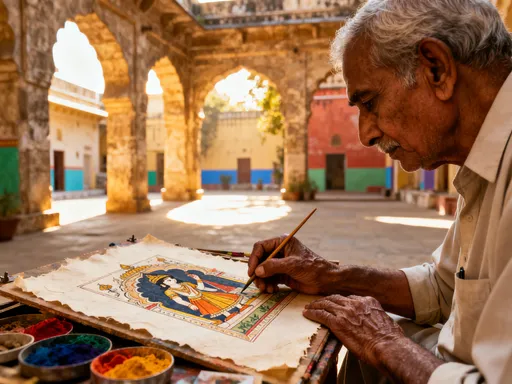
Walking allows for spontaneous discovery in a way no guided tour or car ride can match. It opens space for unexpected encounters—chatting with a vendor selling handmade hammocks, pausing to watch artisans paint traditional tiles, or being invited into a private home during an open-patio event. These moments are not part of any itinerary; they emerge only when you slow down. The sensory experience of walking—feeling the warmth of limestone underfoot, smelling fresh corn from a street tamalería, hearing church bells echo across plazas—deepens your connection to the city. This immersion is what transforms a visit into a meaningful journey.
Compared to other Mexican destinations, Mérida stands out for its pedestrian-friendly atmosphere and low crime rate in central areas. Sidewalks are generally well-maintained, shaded by trees and awnings, and crosswalks are respected by drivers. The city government has invested in walkability, with clear signage and cultural markers along key routes. Moreover, Mérida’s tropical climate, while warm, is made bearable by early morning and late afternoon breezes, especially when exploring shaded streets. For women aged 30 to 55 traveling solo or with family, the city offers a rare combination of safety, beauty, and cultural richness that feels both enriching and comforting.
The Heartbeat of the City: Paseo de Montejo’s Grandeur
Stretching over three miles from north to south, Paseo de Montejo is Mérida’s grandest avenue, designed in the late 19th century to mirror the elegance of Parisian boulevards. Named after the Spanish conquistador who founded the city, this tree-lined thoroughfare once symbolized the wealth of henequen plantation owners—the so-called “green gold” barons who built opulent homes with European materials and design. Today, the street remains a living museum of architectural ambition, where neoclassical columns stand beside Art Nouveau ironwork and Moorish arches, all under the tropical sun.
As you walk, the mansions along Paseo de Montejo tell stories of a bygone era. Many were abandoned during the henequen market’s collapse in the early 20th century, but in recent decades, restoration efforts have revived their splendor. The Museo Fernando García Ponce-Macay, housed in a restored 1920s mansion, showcases modern Yucatecan art in a space that blends colonial structure with contemporary design. Its airy courtyards and natural light make it a quiet sanctuary for reflection. Nearby, the Palacio Cantón, once a private residence, now serves as the Regional Museum of Anthropology. Its ornate façade, complete with intricate stucco and French-style turrets, frames exhibits on Maya civilization that ground the city’s present in its deep indigenous past.
Lesser-known estates, such as Casa Museo Montes Molina, offer intimate glimpses into domestic life during the henequen boom. These homes often feature hand-carved wooden doors, Talavera tile floors, and central patios designed for cooling air in the humid climate. While some mansions remain private, others open their doors during cultural festivals or by appointment, allowing visitors to appreciate details like stained-glass windows imported from Italy or ceilings painted with mythological scenes. Walking this avenue in the early morning, when the sun casts long shadows and the street is quiet, enhances the sense of stepping into another time.
For comfort, it’s best to walk Paseo de Montejo in the early hours—between 7:00 and 9:30 a.m.—when temperatures are milder and the light is ideal for photography. Carrying a reusable water bottle and wearing a wide-brimmed hat are practical steps to enjoy the heat without discomfort. The city provides public water refill stations in some parks, and small convenience stores (abarrotes) are spaced regularly along the route. Safety is generally excellent on this well-trafficked avenue, especially during daylight, making it ideal for solo walkers and small groups alike.
Colonial Splendor in the Historic Center
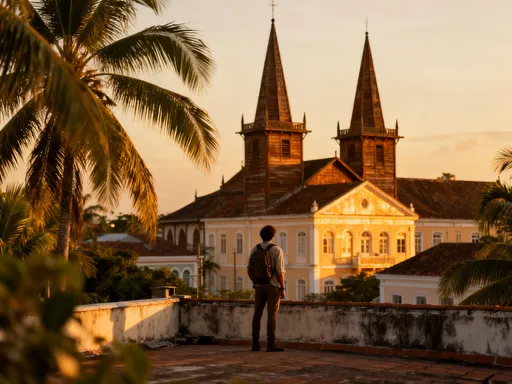
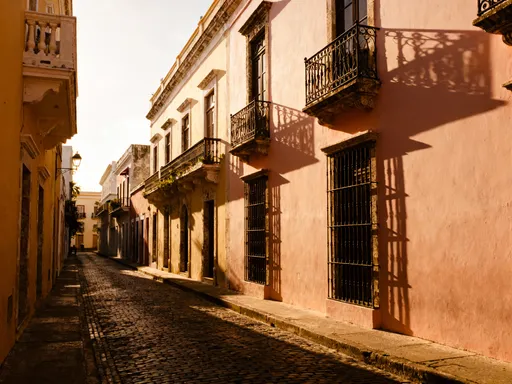
The heart of Mérida beats strongest in its historic center, where narrow streets form a walkable grid centered around the main square, the Plaza Grande. This area, laid out in the 1540s on the ruins of the Maya city T’ho, preserves its colonial layout with remarkable clarity. Each block offers a new architectural delight, from grand public buildings to modest homes with brightly painted facades. The city’s reconstruction using local limestone gave rise to a unique urban texture—soft gray walls that glow in the sunlight and cool to the touch in the shade.
At the center stands the Catedral de San Ildefonso, the oldest cathedral in mainland Mexico, completed in 1598. Its fortress-like façade, built with stones from nearby Maya temples, reflects both religious authority and colonial adaptation. Inside, the cathedral’s simplicity contrasts with its historical weight—this was the site of early Spanish governance and missionary efforts. Nearby, the Palacio de Gobierno occupies an entire city block, its yellow exterior and red trim making it impossible to miss. The building houses murals by Fernando Castro Pacheco that depict Yucatán’s history, from ancient Maya rituals to the henequen era. These works, visible to the public without charge, offer a powerful visual narrative of resilience and identity.
Another highlight is the Casa de la Cultura, a restored 17th-century mansion that now hosts art exhibitions, music performances, and community events. Its grand staircase and carved wooden beams speak to the craftsmanship of the era, while its open courtyard provides a peaceful retreat from the bustle of Calle 60. What makes these buildings remarkable is not just their preservation, but the way they continue to serve the public. Unlike museums sealed behind glass, these spaces are lived-in, their doors open to residents and visitors alike.
For photography enthusiasts, the changing light throughout the day transforms the city’s appearance. At sunrise, the east-facing façades glow in soft gold; by midday, shadows sharpen, highlighting architectural details like wrought-iron grilles and ornate cornices. Sunset bathes the buildings in warm amber, especially striking along Calle 64 and Calle 62. Evening walks reveal a different energy—families strolling, couples dining at sidewalk cafes, and musicians performing in the plazas. This interplay of light, sound, and movement turns the historic center into a living canvas.
Plazas That Tell Stories: From Zócalo to Plaza Santa Lucía
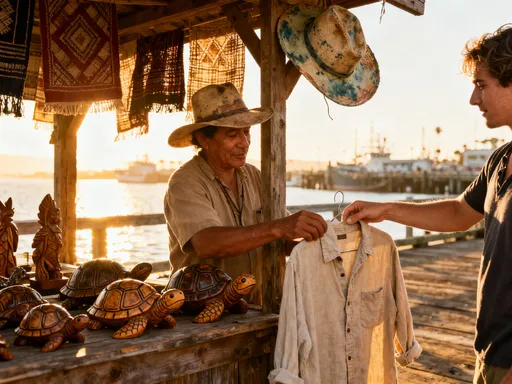
In Mérida, plazas are more than open spaces—they are the soul of community life. The main Zócalo, officially known as Plaza Grande, functions as the city’s living room. Benches ring the square, shaded by towering ceiba trees, where elders sip coffee, children chase pigeons, and tourists pause to take in the surroundings. By day, the plaza is quiet and dignified; by evening, it comes alive with music, dance, and the scent of grilled meat from nearby food stalls. On Sundays, local artisans set up temporary markets, selling handmade jewelry, textiles, and pottery.
The Zócalo is surrounded by some of the city’s most important buildings—the cathedral, the city hall, and the old city jail—creating a sense of historical continuity. But its true magic lies in its role as a gathering place. Locals use it for everything from casual meetings to political rallies to wedding photos. For visitors, sitting in the Zócalo offers a chance to observe daily life without intrusion. It’s a space of inclusion, where everyone, regardless of background, is welcome to rest, reflect, or join in.
Just a few blocks away, Plaza Santa Lucía offers a quieter but equally meaningful experience. Once the site of a colonial-era convent, the plaza now features an underground museum that showcases Maya artifacts discovered during excavations. Glass panels in the plaza floor allow visitors to view the ruins below, connecting the present to the pre-Hispanic past. Benches and fountains create a peaceful atmosphere, and the surrounding trees provide shade for reading or quiet conversation. Unlike more tourist-heavy plazas in other cities, Santa Lucía remains primarily a local space, frequented by nearby residents and students from the adjacent university.
These plazas matter not just for their beauty, but for their function as cultural stages. They host free concerts, dance performances, and seasonal festivals like Hanal Pixán, the Yucatecan Day of the Dead celebration. During these events, the squares become vibrant with altars, marigolds, and traditional foods, offering a deep, respectful glimpse into local traditions. For women traveling with family or seeking meaningful cultural experiences, participating in or observing these gatherings provides a sense of connection that goes beyond sightseeing.
Hidden Gems Only Walkers Can Find
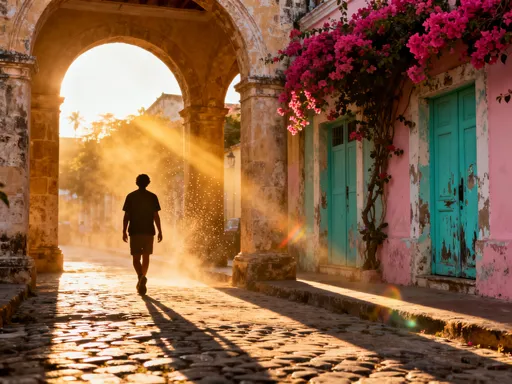
While the grand avenues and main plazas draw most attention, Mérida’s true charm often lies in its hidden corners—places only accessible on foot and rarely marked on maps. Just off Calle 60, narrow alleys lead to unexpected discoveries: a mural depicting Maya cosmology, a tiny workshop where artisans carve wooden masks, or a brightly painted door that opens to a lush, centuries-old courtyard. These patios, once the heart of colonial homes, are now hidden treasures, some preserved by families, others converted into cafes or boutique hotels.
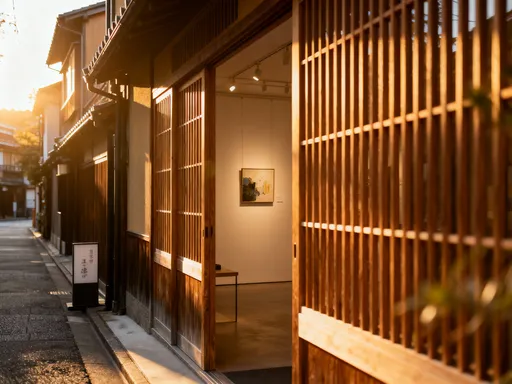
One such find is the courtyard behind Iglesia de la Mejorada, a small 18th-century church with a modest façade but a surprisingly elegant interior. Its quiet atmosphere offers a moment of stillness amid the city’s energy. Nearby, the Calle 59 corridor has become a hub for local artists, with galleries tucked into former homes and murals transforming blank walls into storytelling canvases. These spaces are not curated for tourists; they exist because of community pride and creative expression.
The joy of walking in Mérida often comes from getting slightly “lost”—not in a disorienting way, but in the sense of releasing control and allowing the city to guide you. Turning down an unmarked street might lead to a grandmother selling fresh papaya juice from her porch, or a spontaneous dance rehearsal in a side plaza. These unplanned moments are what make travel memorable. They remind us that authenticity isn’t found in guidebooks, but in the rhythm of everyday life.
Some of the most touching discoveries are the small churches scattered throughout the city—like Templo de la Soledad or Capilla de los Remedios—each with its own character and history. Though not major tourist attractions, they offer peace, beauty, and a glimpse into the spiritual life of the community. Many are open during daylight hours, and visitors are welcomed quietly, with respect for their sacred function.
Blending Past and Present: Modern Life Among Ancient Walls
What makes Mérida truly special is how seamlessly the past and present coexist. Historic buildings are not frozen in time; they are adapted for modern use with care and respect. A 19th-century mansion might now house a coffee shop where locals sip cappuccinos under ceiling fans, or a boutique selling handmade hammocks and ceramics. These transformations preserve the architectural integrity while supporting the local economy. The result is a city that feels alive, not like a museum exhibit.
Walking through the city, you’ll notice how businesses integrate into the historic fabric. A bookstore occupies a colonial home with arched doorways and tiled floors; a yoga studio opens onto a courtyard filled with plants and soft music. These spaces honor their past while serving contemporary needs. The trend of adaptive reuse reflects a broader community commitment to preservation, driven not just by government policy but by local pride. Residents see their heritage as something to be lived in, not just protected.
This respectful coexistence extends to urban development. New construction in the historic center is regulated to maintain architectural harmony—building heights, materials, and colors are carefully managed. As a result, the city retains its human scale and visual continuity. For visitors, this means every block feels cohesive, not disrupted by jarring modern structures. It also means that walking remains a pleasure, with consistent shade, clean sidewalks, and inviting storefronts.
Observing how locals interact with their environment—repairing a stone wall, planting native flowers, or hosting a family event in a shared patio—reveals a deep connection to place. This sense of stewardship is something visitors can learn from and support. By choosing to walk, shop locally, and engage respectfully, travelers become part of the city’s ongoing story.
Planning Your Own Architectural Walking Journey
To fully appreciate Mérida’s beauty, planning your walking route enhances both comfort and discovery. For morning walks, start at the Zócalo and move north along Paseo de Montejo, taking advantage of cooler temperatures and soft light. This route covers major landmarks while allowing time to rest at parks or cafes. In the afternoon, shift to shaded side streets or visit indoor sites like museums. Evening walks, especially on Fridays and Sundays, offer the chance to experience the city’s famous “Paseo Nocturno,” when streets close to traffic and fill with performers, food vendors, and families.
Footwear is essential—choose breathable, supportive shoes with good arch support. The limestone streets, while beautiful, can be uneven. Lightweight, moisture-wicking clothing helps manage the heat, and a light scarf can serve as sun protection or a cover-up when entering churches. While Mérida is welcoming, dressing modestly shows respect for local customs, especially in religious or residential areas.
Useful tools include offline maps and city walking apps that highlight self-guided tours. However, avoid over-reliance on technology—let yourself wander. Many of the best discoveries happen when you step away from the screen. Paper maps from the tourist office or hotel can be just as effective and encourage a slower pace.
Supporting local businesses enriches the experience. Stop at a family-run panadería for sweet bolillo bread, buy handmade crafts from street vendors, or enjoy a traditional lunch of cochinita pibil at a neighborhood comedor. These small choices make a difference, sustaining the culture you’ve come to admire. Carry small bills for ease, and don’t hesitate to smile and say “buenos días”—a simple greeting opens doors in more ways than one.
Walking through Mérida isn’t just a way to see the city—it’s a way to understand it. Each step connects you to centuries of history, craftsmanship, and community. The architecture stops being mere backdrop and becomes a living story, told in stone, color, and light. For women seeking beauty, safety, and authenticity, Mérida offers a rare gift: the chance to move slowly, see deeply, and return home changed. So lace up your shoes. Let your feet guide you through one of Mexico’s most enchanting cities, where every corner holds a quiet wonder waiting to be found.