You Won’t Believe What I Found in Udaipur’s Hidden Art Spaces
Udaipur isn’t just palaces and lakes—it’s a living canvas. I went searching for art beyond the postcards and stumbled upon something real: quiet courtyards humming with creativity, where paint smells fresh and stories are brushed onto walls. These aren’t tourist traps—they’re hidden studios, family-run galleries, and open-air spaces where tradition meets bold new ideas. If you’ve ever wanted to feel a city’s soul, not just see it, this is where to start. What I discovered wasn’t in any guidebook, but it changed how I understand travel. It’s one thing to admire beauty from a distance, another to stand inches from a painting still drying, watching sunlight catch the edge of a brushstroke made with hands trained over decades. In Udaipur, art isn’t displayed—it’s lived.
The Unexpected Heart of Udaipur: Art Beyond the Guidebooks
When most travelers think of Udaipur, they picture the shimmering Lake Pichola, the grand silhouette of the City Palace, or couples gliding across the water in shikaras. These are, without doubt, breathtaking. But beneath the polished surface of postcard perfection lies a quieter, more intimate rhythm—one measured in brushstrokes, not boat oars. While the city’s architectural marvels draw millions, a growing number of visitors are discovering a different kind of treasure: the unmarked doorways, the weathered archways, the alleys where art pulses through the stones like a secret heartbeat.
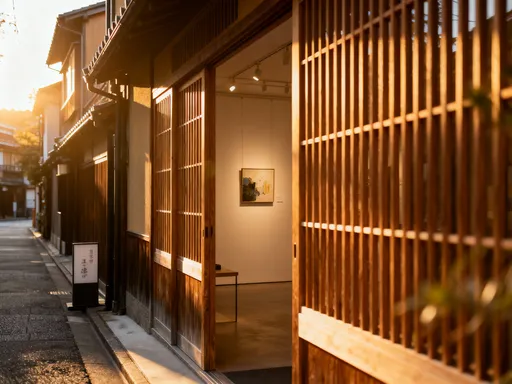
These hidden art spaces are not listed on mainstream travel apps, nor do they carry flashy signs. They exist in the gaps between the well-trodden paths, often tucked into centuries-old havelis or repurposed merchant homes. What makes them special is not their size or fame, but their authenticity. They are not created for Instagram moments but for creation itself. Here, art is not a product to be consumed quickly, but a practice to be respected, observed, and sometimes, if invited, quietly absorbed.
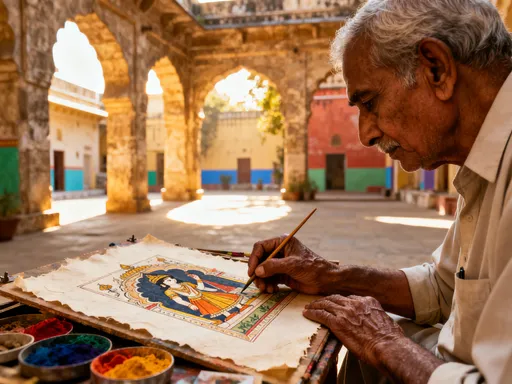
My own discovery began by accident. Wandering through the narrow lanes near Gangaur Ghat one early morning, I heard a soft scratching sound—like a pencil on paper, but more rhythmic. Following it, I turned a corner and saw a small courtyard where sunlight spilled over a wooden easel. An older man sat cross-legged, his hand moving with precision across a tiny canvas. Paint pots lined the stone ledge beside him, and the air carried the faint scent of turpentine and earth. No sign announced the place. No price list hung on the wall. But the moment felt sacred. This wasn’t a performance for tourists. It was real life.
Step Into the Courtyards: Where Tradition Paints the Present
One of the most profound experiences in Udaipur is stepping into one of these heritage courtyards turned artist studios. In neighborhoods like Fatehpura and Bada Bazaar, traditional havelis with carved sandstone arches and latticed windows now serve as creative sanctuaries. These are not museums frozen in time, but living spaces where ancient techniques are practiced daily. Many of the artists here specialize in Rajasthani miniature painting, a craft that dates back to the 17th century and once flourished under royal patronage.
Miniature painting is not for the impatient. A single piece, no larger than a sheet of notebook paper, can take weeks or even months to complete. Artists use brushes made from the hair of squirrels—so fine they can hold just a few drops of pigment. The colors themselves are often derived from natural sources: lapis lazuli for deep blue, crushed coral for red, malachite for green. Some artists still grind their own pigments, mixing them with gum arabic to create luminous, long-lasting hues. The process is meditative, demanding not only technical mastery but also immense patience and focus.
During a visit to one such courtyard studio, I watched as an artist named Ramesh carefully outlined the eyes of a royal figure. His hand never trembled, even as he worked under the morning sun. “The eyes are the soul of the painting,” he said softly, not looking up. “If they are not right, the whole piece fails.” His dedication was palpable. This was not just a job; it was a lineage. His grandfather had painted for the royal family, and his son now studies under him, learning the same techniques, the same stories.
What makes these spaces so vital is that they keep tradition alive without turning it into a relic. While the themes often draw from mythology, court life, or nature, many artists subtly infuse their work with contemporary reflections—a modern gesture in an ancient pose, a hint of urban life in a rural scene. These courtyards are not resisting change; they are absorbing it, like water into desert soil. They offer a rare model of cultural continuity: rooted in the past, yet open to the present.
Street Art with Soul: Murals That Tell Udaipur’s Stories
While the miniature painters work in quiet seclusion, another kind of artistry has been transforming Udaipur’s public spaces. Over the past decade, a vibrant street art movement has taken root, particularly along the outer walls near the City Palace and in the lanes branching off S-22 Road. Unlike the polished murals found in global cities designed for photo ops, Udaipur’s street art feels deeply personal, even conversational.
Some walls depict traditional Rajasthani folk tales—epic love stories like Dhola Maru or tales of valor from local ballads. Others carry more modern messages: a striking mural of a woman holding a pitcher of water, with the words “Jal Hai, Toh Kal Hai” (“Water Today, Tomorrow Exists”) painted beneath it, speaks to the region’s ongoing water conservation efforts. Another shows a peacock merging with a tree, its feathers becoming leaves, a poetic commentary on environmental harmony.
What sets these murals apart is their origin. Many are the result of community-led initiatives, where local artists collaborate with visiting muralists from other parts of India and abroad. These projects are not imposed from the top down, but grow from grassroots conversations. Artists often consult with residents before painting, ensuring the imagery resonates with the neighborhood’s identity. This collaborative spirit prevents the art from feeling alien or decorative. Instead, it becomes part of the city’s daily language.
Walking through these areas, you begin to notice how the murals interact with their surroundings. A painted lotus blooms beside a real one floating in a stepwell. A child’s hand-drawn addition to a larger mural is left untouched, embraced as part of the artwork. There is no barrier between the art and the people. It doesn’t ask to be admired from a distance; it invites participation, even if only in the form of a passing glance or a shared smile.
Galleries with a Pulse: From Family Studios to Creative Hubs
Udaipur’s art scene thrives not only in hidden courtyards and on public walls but also in small, family-run galleries that defy the sterility often associated with formal art spaces. Places like Shilpi Art Gallery and Lalit Art Studio are not galleries in the conventional sense. There are no “Do Not Touch” signs, no hushed tones, no attendants in uniforms. Instead, you might be greeted by a dog napping in the sun, a grandmother sipping chai in the corner, or a child quietly sketching on scrap paper.
These galleries are homes as much as they are exhibition spaces. Generations of artists live and work under the same roof, passing down techniques, stories, and philosophies. At Shilpi, the owner’s daughter demonstrated how she prepares her canvas by stretching handmade paper over wood, then coating it with a fine layer of chalk paste—a process unchanged for generations. “It makes the surface smooth,” she explained, “so the paint doesn’t bleed. But it also makes the art last longer. We paint not just for today, but for our grandchildren.”
What makes these spaces sustainable is the thoughtful integration of art tourism. Visitors are welcome, but not treated as customers first. They are invited to observe, ask questions, and, if moved, to support the artists by purchasing small works or commissioning pieces. Many families rely on these sales to fund materials, apprenticeships, and community workshops. A modest purchase isn’t just a souvenir—it’s an act of cultural preservation.
For travelers, the key is engagement with respect. These are not performance spaces. Watching an artist work should be done quietly, without demands for photos or demonstrations. A simple “namaste” and a few thoughtful questions go further than any transaction. And when you do buy something, take the time to learn its story—who made it, what it represents, how long it took. That connection transforms a piece of art into a bridge between worlds.
The Artist’s Rhythm: A Day in the Life of a Udaipur Creator
To truly understand Udaipur’s art, one must see it as part of a daily rhythm, not a separate activity. For many artists here, painting is woven into the fabric of life, much like cooking or prayer. I spent a morning with Meera, a miniature painter in her fifties, to witness her routine.
Her day begins before sunrise. After a simple prayer and a cup of ginger tea, she checks the weather—natural light is essential, and Rajasthan’s strong sun can be both a gift and a challenge. By 7 a.m., she is at her workspace, a sunlit alcove in her home. First, she prepares her palette, mixing pigments with water and gum. She tests each color on a scrap of paper, adjusting until the tone is perfect. Only then does she pick up her brush.
Her current project is a depiction of Krishna playing the flute, surrounded by cows and gopis. Each cow’s eye must be identical in expression, each fold of fabric in the gopis’ sarees rendered with precision. She works in silence, pausing only to sip tea or stretch her hand. By midday, she has completed a single square inch of the painting. The physical toll is real—her eyes grow tired, her wrist stiffens. Yet there is no rush. “If I hurry,” she says, “the spirit leaves the work.”
In the afternoon, she shifts to teaching. Two apprentices, both in their early twenties, arrive to learn the basics of line work and color mixing. Later, she reviews commissions—a wedding invitation painted in miniature style, a set of greeting cards for a boutique hotel. But she also carves out time for her own pieces, those not made for sale but for expression. One such painting shows a woman standing at a window, looking out at a modern city skyline. It’s subtle, but unmistakable: tradition watching the future.
For Meera, art and spirituality are inseparable. “When I paint,” she says, “I am not just making something beautiful. I am remembering. I am honoring. I am praying.” This mindset is not unique to her—it echoes across Udaipur’s art community. The act of creation is not merely technical; it is devotional.
How to Experience These Spaces Like a Local
Discovering Udaipur’s hidden art spaces requires a shift in mindset. Forget ticking off landmarks or rushing from one attraction to the next. The best way to encounter these places is on foot, early in the morning, when the city is still waking up. Mornings are ideal not just for cooler temperatures, but because that’s when artists are most active. Weekdays tend to be quieter, offering more opportunities for genuine interaction.
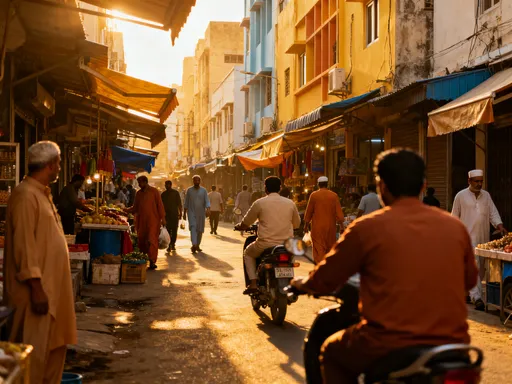
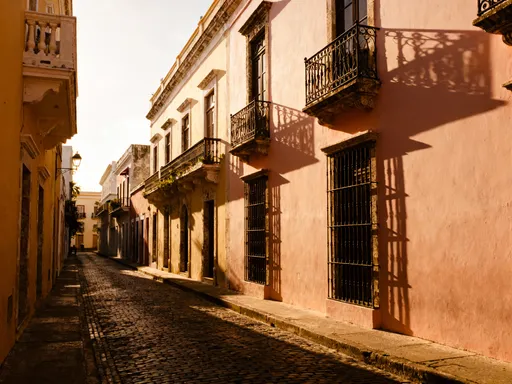
Forget relying solely on maps or apps. Some of the most memorable studios have no online presence. Instead, wander the lanes behind Jagdish Temple, where the stone paths slope gently toward the lake. Explore Rajat Vatika, a quiet neighborhood where old homes open into lush courtyards. Stroll through Chaugan, a grassy expanse flanked by colonial-era buildings, and follow the side streets where children play and laundry flaps in the breeze. Let curiosity guide you. Turn down alleys that smell of spices and paint. Listen for the scratch of brushes or the hum of conversation in a shaded doorway.
When you do find a space, observe the etiquette. Ask permission before entering, even if the door is open. A smile and a simple “May I come in?” go a long way. If someone is working, keep your voice low. Don’t interrupt to ask for photos. Wait for a natural pause. If you wish to support the artist, consider buying a small piece—a postcard, a sketch, a hand-painted bookmark. These are often affordable and carry deep meaning. If purchasing isn’t possible, a respectful tip in a donation box is appreciated.
Most importantly, be present. Put your phone away. Look closely. Ask about the process, the story behind a painting, the artist’s training. These conversations often lead to the richest experiences—an invitation to see a private collection, a recommendation for another hidden studio, or simply a shared cup of tea. That human connection is the real souvenir.
Why Udaipur’s Art Scene Deserves More Than a Glance
Udaipur’s true magic lies not in its reflection on the lake, but in the quiet moments between brushstrokes. Its art scene offers something increasingly rare in modern travel: depth. In a world where destinations are often reduced to hashtags and highlights, Udaipur reminds us that beauty is not just seen, but felt. It lives in the patience of a painter, the pride of a grandmother showing her grandson’s first sketch, the shared silence between a visitor and an artist who understands that some things don’t need translation.
Yet this authenticity is fragile. As Udaipur grows in popularity, there is a risk that these intimate spaces could be diluted by commercialization. Some galleries already cater primarily to tourists, offering mass-produced miniatures with little soul. The challenge is to support the art without overwhelming it, to appreciate without consuming.
Travelers have a role to play. By choosing to visit the quiet studios, to buy from the artists directly, to walk slowly and listen closely, we help preserve what makes Udaipur special. We become part of a cycle of respect and reciprocity. We don’t just take memories home—we leave something behind: attention, appreciation, care.
So the next time you plan a trip to Udaipur, go beyond the lakes and palaces. Let art be your guide. Step into a courtyard. Stand before a mural. Sit quietly in a family gallery. Look into the eyes of the artist across from you, and see not just a creator, but a keeper of stories, a bridge between centuries. That is where the real journey begins. That is where you don’t just visit a place—you connect with it.