Châteaux, Vines, and Living History: A Cultural Journey Through France’s Loire Valley
Have you ever stood beneath a spiral staircase in a 15th-century château and felt history whisper through the stones? The Loire Valley isn’t just a postcard of grand castles and sun-drenched vineyards—it’s a living museum where culture shapes every view. From Renaissance artistry to the rhythm of riverside villages, this region turns sightseeing into a soulful experience. I’ll take you beyond the brochures to discover how the Loire’s true beauty lies in its timeless cultural heartbeat.
The Loire Valley: Where Landscape Meets Legacy
Stretching across central France, the Loire Valley unfolds like a carefully curated tapestry woven from rivers, vineyards, forests, and centuries of human endeavor. The Loire River, the longest in France, has long served as a vital artery for trade, agriculture, and settlement. Its gentle meanders have nurtured fertile lands, enabling the growth of towns, markets, and châteaux that reflect both natural abundance and cultural ambition. This symbiotic relationship between land and people is one reason the valley earned UNESCO World Heritage status in 2000. The designation does not merely celebrate scenic beauty; it recognizes the valley as a cultural landscape where human creativity has harmonized with the environment over generations.
The region’s historical significance dates back to pre-Roman times, but it was during the late Middle Ages and Renaissance that the Loire Valley became a stage for French cultural evolution. As Paris grew vulnerable to conflict during the Hundred Years’ War, French royalty and nobility began relocating their courts to the safer, more temperate lands along the Loire. This shift transformed the valley into a political and artistic hub, where new ideas—especially from Italy—were embraced and reimagined. The arrival of Renaissance ideals in the 15th and 16th centuries sparked an architectural renaissance, leading to the construction of opulent châteaux that were less about defense and more about expression, aesthetics, and power.
Today, the valley spans over 280 kilometers from Orléans to Sully-sur-Loire in the east to Chalonnes-sur-Loire in the west, encompassing a diverse patchwork of microclimates and terroirs. This environmental variety supports an exceptional range of agriculture, particularly viticulture, which has become a defining feature of local identity. The river continues to shape life in the region, not only through its physical presence but also through its influence on traditions, festivals, and daily rhythms. Whether it’s the early morning mist rising off the water or the golden light that bathes the stone facades at dusk, the Loire remains a constant, quiet witness to a culture that values balance, beauty, and continuity.
Châteaux as Cultural Landmarks, Not Just Castles
The châteaux of the Loire Valley are often admired for their grandeur, but their true significance lies in what they represent: a transformation in French society from feudal militarism to humanist refinement. Originally built as fortified structures during times of unrest, many evolved into palatial residences during the Renaissance, reflecting a shift in priorities from protection to patronage. These estates became canvases for artistic innovation, where architecture, interior design, and landscaping converged to express wealth, taste, and intellectual curiosity. Among them, Château de Chambord stands as a masterpiece of this transition—a monument so ambitious in scale and design that it remains one of the most recognizable symbols of French cultural achievement.
Chambord’s double-helix staircase, attributed to Leonardo da Vinci’s influence, is not merely an engineering marvel; it embodies the Renaissance fascination with symmetry, movement, and mystery. The château’s roofline, often described as a forest of chimneys and turrets, reveals a blend of medieval fortification elements with classical proportions and Italianate flourishes. While King Francis I never lived there permanently, he used Chambord as a hunting lodge and a stage for royal spectacle, reinforcing the idea that power could be demonstrated through beauty as much as through force. Today, visitors walk through its vast halls and manicured gardens not just to admire stone and symmetry, but to step into a moment when France was redefining itself through art and imagination.
Equally emblematic is Château de Chenonceau, gracefully spanning the Cher River like a stone ribbon. Known as the “Ladies’ Château” due to the influential women who shaped its history—such as Diane de Poitiers and Catherine de’ Medici—Chenonceau reflects the growing role of female patronage in the arts. Its elegant arches, candlelit galleries, and formal gardens create an atmosphere of grace and introspection. Unlike Chambord, which impresses through scale, Chenonceau captivates through intimacy and harmony with nature. The way it mirrors in the river below enhances its poetic quality, reminding visitors that beauty in the Loire Valley is often found in balance—between architecture and landscape, past and present, power and elegance.
Further along the river, Château d’Amboise offers a more personal connection to history. Perched above the town of Amboise, it was a favored residence of French kings and the final resting place of Leonardo da Vinci, whose tomb lies in the adjacent Saint-Hubert Chapel. The château’s terraced gardens descend toward the Loire, offering panoramic views that once inspired courtiers and artists alike. Its walls have witnessed royal births, political intrigues, and artistic collaborations, making it a microcosm of the valley’s cultural journey. These châteaux are not relics frozen in time; they are active participants in the cultural life of the region, hosting exhibitions, concerts, and educational programs that keep their legacies alive for new generations.
Art, Literature, and the French Ideal of Vie Belle
The Loire Valley has long been a muse for artists, writers, and thinkers drawn to its light, landscapes, and aura of timeless elegance. The French concept of vie belle—the beautiful life—finds vivid expression here, where daily existence is infused with aesthetic intention. This is a region where meals are savored, gardens are tended with care, and even the smallest village square is arranged to delight the eye. It is no surprise that painters from the 19th century onward, including members of the Barbizon School, found inspiration in the valley’s soft light and pastoral scenes. Their works captured not just the visual beauty of châteaux and countryside, but the mood of a place where nature and culture coexist in harmony.
Literature, too, has been shaped by the Loire’s atmosphere. Writers such as Honoré de Balzac and George Sand—both of whom had connections to the region—wove its landscapes into their narratives, using the valley as a backdrop for stories of love, ambition, and social change. Balzac’s detailed descriptions of provincial life reflect the rhythms of towns like Tours and Blois, where commerce, tradition, and quiet dignity define the character of the people. George Sand, who spent time in the nearby Berry region, celebrated the simplicity and authenticity of rural life, values that continue to resonate in the Loire Valley today. Their works remind us that culture is not confined to grand buildings or famous names, but lives in the way people speak, eat, and relate to their surroundings.
This pursuit of beauty and refinement is celebrated annually through a rich calendar of cultural events. Classical music festivals, such as the Festival de Musique de Tours or the summer concerts at Château de Villandry, draw performers and audiences from across Europe. These events are not staged for tourists alone; they are deeply rooted in local life, often supported by municipal governments and volunteer associations. Garden exhibitions, too, play a central role, with properties like Château de Chaumont hosting the International Garden Festival each year. Artists and landscape designers from around the world are invited to create temporary installations that explore themes of nature, sustainability, and creativity. These events transform static heritage sites into dynamic spaces of contemporary dialogue, proving that tradition and innovation can coexist.
Vineyards with a Story: Wine as Cultural Expression
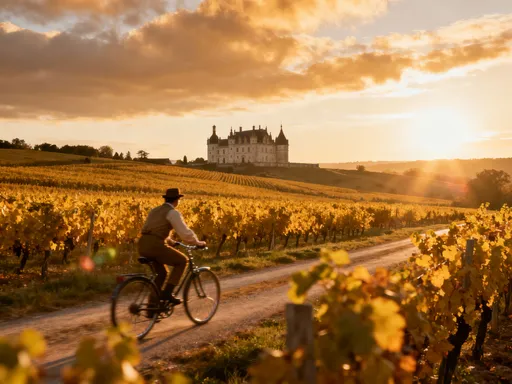
To walk through the vineyards of the Loire Valley is to step into a living tradition shaped by soil, climate, and human care. Unlike the industrialized wine production seen in some regions, the Loire remains deeply rooted in small-scale, family-run viticulture. Villages like Sancerre, Vouvray, and Chinon are not just names on wine labels; they are communities where winemaking is a way of life, passed down through generations. Each appellation reflects a unique terroir—the combination of soil, slope, and microclimate—that gives the wines their distinctive character. Sancerre’s flinty Sauvignon Blanc, for instance, owes its sharp minerality to the region’s limestone and silica-rich soils, while the Chenin Blanc of Vouvray expresses everything from crisp dryness to luscious sweetness, depending on the harvest and winemaker’s intent.
What sets Loire wines apart is not just their quality, but the philosophy behind their production. Many growers practice sustainable or organic farming, respecting the land as both an economic and cultural resource. The seasonal rhythm of pruning, flowering, and harvest is still observed with reverence, linking modern vintners to centuries of agricultural tradition. Visitors to family-run wineries often experience a level of authenticity rarely found in larger commercial operations. These are not polished tasting rooms designed for mass tourism, but working cellars where conversations happen in hushed tones, and bottles are opened with pride rather than salesmanship. A tour of a small domaine might include a walk through the vines, a peek into the fermentation tanks, and a seated tasting under a shaded pergola, accompanied by local cheese and bread.
The diversity of Loire wines mirrors the region’s cultural complexity. From the sparkling Crémant de Loire to the delicate Rosé d’Anjou, there is a wine for every palate and occasion. The region is also a pioneer in reviving lesser-known grape varieties, such as Pineau d’Aunis and Grolleau, preserving biodiversity and regional identity. Wine in the Loire is not merely a product; it is a narrative of place, people, and perseverance. When you raise a glass of Vouvray or a Cabernet Franc from Bourgueil, you are not just tasting fruit and fermentation—you are engaging with a heritage shaped by weather, labor, and love.
Village Life: The Rhythm Behind the Scenery
Beyond the châteaux and vineyards, the soul of the Loire Valley beats strongest in its towns and villages. Places like Amboise, Blois, and Saumur offer more than picturesque streets and tourist shops; they reveal the daily cadence of French provincial life. In the early morning, the scent of fresh baguettes drifts from boulangeries as shopkeepers raise their shutters and arrange displays of seasonal produce. Market days bring color and energy to town squares, where farmers sell goat cheese, asparagus, honey, and jars of homemade jam. These markets are not staged for visitors—they are essential to local life, where residents gather not only to shop but to connect, exchange news, and uphold traditions.
Amboise, nestled along a bend in the Loire, exemplifies this blend of history and vitality. While tourists flock to its château and Leonardo da Vinci’s Clos Lucé, locals go about their routines—children walk to school, retirees sip coffee at sidewalk cafés, and artisans restore historic homes with meticulous care. The town’s riverside promenade is a favorite spot for evening strolls, where families gather as the sun dips below the treetops. There is a quiet dignity in the way life unfolds here, a sense that beauty is not something to be consumed quickly, but lived slowly and intentionally.
Blois, the former capital of the Duchy of Orléans, offers a different character with its mix of Gothic, Renaissance, and classical architecture. The old town climbs a hillside, its narrow streets lined with half-timbered houses and hidden courtyards. The weekly market in Place du Marché brings together regional specialties, from rillettes to aged wines, offering a sensory immersion into local culture. Saumur, known for its equestrian traditions and sparkling wine, maintains a strong sense of community through festivals, riding schools, and riverfront events. These towns do not exist solely for tourism; they are lived-in, evolving spaces where heritage is not preserved behind glass, but practiced in everyday choices—from the way bread is baked to how gardens are planted.
Practical Insights for a Meaningful Visit
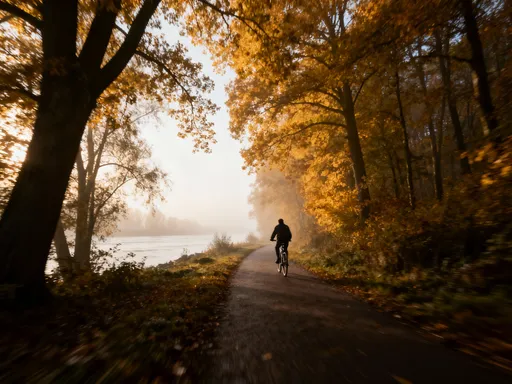
To truly connect with the Loire Valley, timing and intention matter. While summer brings long days and vibrant festivals, it also brings crowds. For a more reflective experience, consider visiting in late spring or early autumn, when the light is soft, the vineyards are lush or golden, and the towns breathe at a gentler pace. April and May offer blooming gardens and mild temperatures, ideal for cycling and riverside walks. September and October coincide with the harvest season, when wineries welcome visitors for tastings and cellar tours, and the air carries the sweet scent of fermenting grapes.
Your interests should guide your itinerary. Those drawn to art and architecture might focus on the central stretch between Amboise and Chenonceau, where châteaux are densely clustered and easily accessible. Food and wine enthusiasts will want to explore the appellations of Touraine, Anjou, and Pouilly-Fumé, perhaps arranging private tours with vintners who share their craft with passion. Families may enjoy the interactive exhibits at Château de Villandry or the aquarium and equestrian shows in Saumur. Slowing down is key—choose a base village or small hotel and spend several days exploring nearby sites rather than rushing from one highlight to the next.
Transportation options enhance the experience when chosen thoughtfully. Cycling along the Loire à Vélo route—one of France’s most celebrated greenways—allows travelers to move at a pace that invites observation and connection. Well-marked paths follow the river, linking towns, vineyards, and châteaux with minimal traffic. River cruises offer another serene way to see the landscape, with multi-day barges providing comfortable accommodations and guided stops. For those relying on public transit, the regional train network connects major towns like Tours, Blois, and Orléans, though rural access may require local buses or car rentals. Regardless of how you travel, the goal is to move with mindfulness, allowing space for unplanned moments—a chance conversation, a quiet garden, a village fête discovered by accident.
Conclusion: Seeing More Than the View
The Loire Valley invites more than sightseeing; it calls for seeing with intention. Its châteaux are not just monuments to kings and nobles, but testaments to human creativity and the enduring desire to shape beauty from stone and time. Its vineyards are not merely sources of wine, but living records of land, labor, and legacy. And its villages are not backdrops, but beating hearts where culture is lived, not performed. When we approach this region with curiosity and respect, we do more than visit—we participate in a continuum of tradition that values harmony, craftsmanship, and the quiet joy of a well-lived life.
Meaningful travel is not measured in checklists, but in moments of connection—when a garden’s symmetry echoes in your thoughts, when a sip of wine carries the taste of sun and soil, when a village market becomes a window into another way of being. The Loire Valley offers these moments generously, but they require presence to be felt. By slowing down, listening, and looking beyond the surface, we honor not only the place but our own capacity for wonder.
As a model of sustainable, soulful tourism, the Loire shows how heritage can thrive without spectacle, how beauty can be shared without exploitation. It reminds us that the deepest travel experiences are not about conquering destinations, but about being transformed by them. So as you plan your journey, ask not only where you will go, but how you will see. Let the Loire Valley be more than a destination—let it be an invitation to live more deeply, more thoughtfully, and with greater appreciation for the stories embedded in every stone, vine, and smile you encounter.