You Won’t Believe These Hidden Photo Spots in Toledo’s Public Spaces
Toledo isn’t just a postcard from the past—it’s a living canvas. Wandering its cobblestone streets, I kept stumbling on public spaces so visually rich, they begged to be photographed. From sunlit plazas to shadow-drenched alleyways, every corner tells a story. If you're chasing authentic, share-worthy moments beyond the tourist trail, Toledo delivers. This is about more than sightseeing—it’s about capturing soul. And trust me, your feed will thank you.
Why Toledo’s Public Spaces Are a Photographer’s Dream
Toledo stands as one of Spain’s most visually layered cities, where centuries of architectural evolution unfold not within museums, but in its open-air plazas, winding alleys, and sunlit courtyards. The city’s urban fabric is a rare fusion of medieval, Moorish, and Renaissance design, each era leaving behind not just buildings, but entire public environments shaped by cultural memory. Unlike modern cities designed for efficiency, Toledo grew organically over time, creating unexpected vantage points, asymmetrical perspectives, and intimate spaces that reward patient observation. This layered history is not hidden behind glass—it’s embedded in the very stones beneath your feet, making every public square a potential masterpiece waiting to be framed.
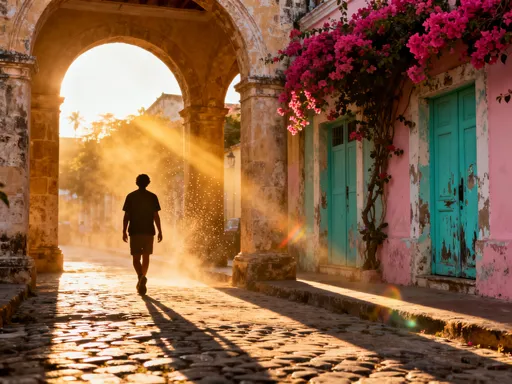
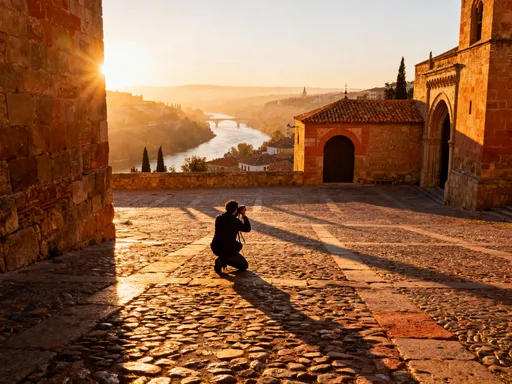
What truly elevates Toledo for photographers is the way light interacts with this complex topography. The city sits atop a hill surrounded by the Tagus River, meaning sunlight hits its narrow streets and elevated terraces at dramatic angles throughout the day. The golden hour, particularly in the late afternoon, bathes entire districts in a warm, honeyed glow that enhances textures and deepens shadows. In the Jewish Quarter, low-angle light slips through tight alleyways, illuminating centuries-old stonework and casting elongated silhouettes across walls. Meanwhile, open plazas like Zocodover capture broad swaths of daylight, offering contrast-rich environments ideal for street photography. These natural lighting conditions, combined with the city’s vertical layout, create depth and dimension that few European destinations can match.
Additionally, Toledo’s status as a UNESCO World Heritage Site ensures preservation without over-commercialization. While major landmarks like the Cathedral and Alcázar draw crowds, the surrounding public spaces remain relatively untouched by mass tourism infrastructure. This balance allows photographers to capture authentic moments of daily life—elderly residents sipping coffee at corner cafes, children playing near historic fountains, or artisans setting up small stalls in quiet squares. The city’s rhythm is slow, deliberate, and deeply rooted in tradition, offering a rare opportunity to document not just architecture, but the living culture that inhabits it. For those seeking images that convey both beauty and narrative, Toledo’s public spaces are nothing short of a dream.
Plaza de Zocodover: The Beating Heart with a Vintage Vibe
At the center of Toledo’s social life lies Plaza de Zocodover, a vibrant square that has served as a marketplace, gathering place, and transit hub for over five centuries. Originally a livestock market during the medieval period, today it functions as the city’s primary meeting point—a space where locals cross paths, tourists regroup, and café terraces buzz with conversation well into the evening. Its historical significance is matched only by its photographic potential, offering a dynamic blend of movement, architecture, and atmosphere. The surrounding buildings, with their arched arcades and weathered façades, provide a timeless frame for candid shots, while the open center allows for wide-angle compositions that capture the pulse of urban life.
One of the most compelling aspects of photographing Zocodover is the opportunity to document spontaneous human interactions. Locals often gather on benches beneath the shade of ancient plane trees, engaging in animated discussions that reflect the city’s enduring sense of community. Pigeons flock to the central fountain, creating fleeting moments of motion that can be captured with a fast shutter speed to freeze wings mid-flap. Café patrons sip espresso at wrought-iron tables, their expressions relaxed and unposed—an ideal subject for street photography that feels genuine rather than staged. To preserve authenticity, it’s best to shoot from a slight distance using a medium telephoto lens, allowing subjects to remain unaware and natural in their actions.
Timing is crucial when photographing this lively square. Early mornings, just after sunrise, offer soft, even lighting and minimal foot traffic, making it easier to focus on architectural details like the intricate stonework of the surrounding arches. By midday, harsh overhead light creates strong contrasts, which can be used creatively to emphasize shadow patterns on the cobblestones. However, the optimal time for photography is late afternoon, when the sun dips behind the cathedral and bathes the plaza in golden warmth. This period, lasting approximately 45 minutes before sunset, transforms the entire space into a glowing stage. For those seeking both atmosphere and clarity, arriving 30 minutes before this window allows time to scout angles and set up compositions in advance.
The Alcázar Gardens: Where History Meets Symmetry
Rising prominently above the city skyline, the Alcázar of Toledo is more than a fortress—it’s a symbol of resilience and grandeur. Originally built as a Roman palace and later rebuilt in the 16th century under Emperor Charles V, the Alcázar now houses a military museum. Yet, it is the surrounding gardens that offer some of the most visually striking photo opportunities in the city. Designed with formal symmetry and strategic elevation, these landscaped grounds provide sweeping panoramic views of Toledo’s terracotta rooftops, the meandering Tagus River, and the distant plains of Castilla-La Mancha. The contrast between the rigid geometry of the garden layout and the organic sprawl of the historic city below creates a powerful visual tension that translates beautifully through the lens.
Photographers will find that the Alcázar gardens excel in architectural and wide-angle photography. The elevated terraces allow for unobstructed sightlines, making them ideal for capturing the city’s skyline during golden hour or blue hour. Using a wide-angle lens, one can compose shots that include both the manicured hedges and stone balustrades of the garden in the foreground and the sprawling urban landscape beyond. The symmetry of the pathways and flowerbeds naturally draws the eye toward the horizon, creating depth and balance in the frame. For added impact, including elements like blooming seasonal flowers or reflective puddles after rain can introduce color and texture without disrupting the overall composition.
To maximize the dramatic effect of these elevated views, consider using a tripod and a narrow aperture (f/8 to f/11) to ensure sharpness across the entire scene. A polarizing filter can help reduce glare on stone surfaces and enhance the contrast between sky and land. Early morning visits are particularly rewarding, as the rising sun casts long shadows across the garden paths and illuminates the eastern façade of the Alcázar in soft, directional light. Mist often lingers over the river valley at this time, adding a dreamlike quality to distant views. While the site attracts occasional tourists, the gardens remain spacious enough to find quiet corners for contemplative shots, especially on weekdays outside peak hours.
Jewish Quarter Courtyards: Intimate Spaces Full of Character
Woven into the labyrinthine streets of Toledo’s old town lies the historic Jewish Quarter, a district that once thrived as a center of religious and intellectual life during the city’s Golden Age. Though many synagogues and homes have been repurposed over time, the neighborhood retains an unmistakable sense of intimacy and history. Scattered throughout this area are small, often overlooked courtyards—hidden patios tucked behind arched doorways, accessible only to those who wander off the main routes. These spaces, though modest in size, are rich in photographic detail: weathered wooden doors bound with iron, flower pots overflowing with geraniums, and walls covered in centuries-old stonework that bears the marks of time.
What makes these courtyards so compelling is their authenticity. Unlike staged photo opportunities, these spaces are part of everyday life. Residents may hang laundry on lines strung between windows, place chairs outside for evening conversations, or tend to small potted plants on window sills. Capturing these moments requires sensitivity and respect. It is essential to avoid intrusive close-ups or flash photography, especially when people are present. Instead, focus on details—textures of peeling paint, the curve of a wrought-iron gate, or sunlight filtering through a grapevine-covered trellis. These elements tell the story of the place without violating personal privacy.
Many of these courtyards are unmarked and discovered only by exploration. Some are accessible through narrow passageways just off Calle del Tránsito or near the Santa María la Blanca synagogue. While they may not appear on official maps, their presence is felt in the quiet dignity of the neighborhood. For photographers, the challenge lies in balancing curiosity with courtesy. A gentle nod or smile when encountering residents goes a long way in establishing goodwill. Shooting during late morning or early afternoon provides consistent light, as these enclosed spaces receive limited direct sunlight. A lens with a wide aperture (f/2.8 or lower) can help maintain image clarity in lower-light conditions, ensuring that shadowed corners remain detailed rather than lost in darkness.
San Miguel Square: A Quiet Stage for Golden Hour Magic
Just a short walk from the bustling Zocodover lies Plaza de San Miguel, a lesser-known but profoundly photogenic square nestled within the heart of Toledo’s historic core. Smaller in scale and quieter in atmosphere, San Miguel offers a more contemplative alternative to the city’s busier plazas. Surrounded by well-preserved medieval buildings with wooden balconies and stone lintels, the square exudes a timeless charm. Its compact size and symmetrical layout create a natural frame for photography, while the reflective cobblestones amplify the effects of changing light. This is a place where stillness meets beauty—a perfect setting for those seeking serenity in their compositions.
The true magic of San Miguel unfolds during golden hour, when the low-angle sunlight washes over the eastern façades, turning the entire square into a warm, cinematic tableau. The light glows on honey-colored stone, highlights the texture of wooden shutters, and casts soft reflections on the wet pavement after a light rain. Because the square is narrow and partially shaded for much of the day, the brief window of direct sunlight becomes a fleeting but powerful moment. Photographers who time their visit correctly can capture images that feel both intimate and luminous, ideal for portrait-style shots or architectural studies.
For optimal results, position yourself in the northwest corner of the square to shoot southeast, capturing the full breadth of the illuminated buildings. A focal length between 35mm and 50mm works well for balancing environmental context with subject detail. To enhance depth, include elements like a lone bench, a bicycle leaning against a wall, or a cat lounging in a sunbeam—small signs of life that add narrative without overwhelming the frame. Due to the square’s size, a tripod may not be necessary unless shooting at slower shutter speeds. The key is patience: wait for the right light, compose deliberately, and let the scene reveal its quiet poetry.
Riverside Walks Along the Tagus: Nature-Infused Urban Frames
While much of Toledo’s charm lies within its walled city, some of the most breathtaking photographic perspectives are found just beyond its perimeter—along the banks of the Tagus River. A series of accessible walking paths trace the river’s edge, offering unobstructed views of the city’s skyline rising dramatically from the hilltop. These vantage points, often overlooked by casual visitors, provide a unique blend of nature and architecture, where water, stone, and sky converge in harmonious balance. The reflections of ancient towers and church spires in the river’s surface create mirror-like compositions, especially during calm mornings when the water is still.
One of the most popular spots for riverside photography is the Mirador del Valle, located a short drive or hike from the city center. This panoramic viewpoint offers a postcard-perfect composition of Toledo framed by the looping river. However, for those who prefer to stay within walking distance, the trail along the riverbank near Puente de Alcántara provides equally stunning angles. From here, the medieval bridge anchors the foreground, leading the eye toward the Alcázar and cathedral in the distance. Including elements like reeds, overhanging trees, or passing swans adds natural depth and movement to the shot.
Early morning is the ideal time to visit these riverside locations. Mist often hovers above the water at dawn, softening outlines and creating an ethereal mood. With minimal foot traffic, photographers can take their time setting up tripods and adjusting exposure settings. A graduated neutral density filter is useful for balancing the brightness of the sky with the darker foreground, especially during sunrise. Because distances are greater than in the city center, a telephoto lens (70–200mm) allows for tighter compositions that isolate specific architectural features. Whether capturing the first light hitting the cathedral’s spire or the gentle ripple distorting a reflection, these riverside walks offer some of the most serene and visually rewarding experiences in Toledo.
How to Move Like a Local: Timing, Etiquette, and Gear Tips
To truly capture the essence of Toledo’s public spaces, it’s important to move through the city with awareness and respect. Locals appreciate visitors who blend in rather than stand out, so dressing modestly—avoiding flashy clothing or large camera bags—helps maintain a low profile. In narrow alleys and small courtyards, using flash can be disruptive and is generally frowned upon, especially when photographing private residences or people in their daily routines. Instead, rely on natural light and higher ISO settings on your camera to maintain image quality without intrusion. Observing social cues, such as pausing when someone makes eye contact or stepping aside to let residents pass, fosters goodwill and allows for more authentic interactions.
Timing your visits strategically enhances both image quality and comfort. Early mornings, between 7:00 and 9:00 a.m., offer the best combination of soft light and minimal crowds, particularly at popular sites like the Alcázar gardens and riverside viewpoints. Midday can be used for exploring shaded areas like the Jewish Quarter alleys, where harsh sunlight is less of an issue. Late afternoon, from 5:00 to 7:00 p.m., is prime time for golden hour photography in open plazas like Zocodover and San Miguel. Weekdays are generally quieter than weekends, making them ideal for unhurried exploration.
When it comes to gear, simplicity is key. A lightweight mirrorless camera with a prime lens—such as a 35mm or 50mm—offers excellent image quality while remaining unobtrusive. These lenses perform well in low light and produce beautiful background blur, ideal for isolating subjects in busy environments. A small tripod under 12 inches is permitted in most public spaces and invaluable for long-exposure shots at dawn or dusk. Avoid bulky equipment that draws attention or impedes movement in tight spaces. Remember, the goal is not to dominate the scene, but to become part of it—quietly observing, patiently waiting, and capturing moments that reflect the true spirit of Toledo.
Toledo’s magic lies not just in its monuments, but in the spaces between them—where daily life unfolds against a timeless backdrop. By exploring its plazas, gardens, and hidden corners, photographers don’t just take pictures; they preserve moments of quiet beauty and cultural continuity. This city invites you to slow down, look deeper, and shoot with intention. Whether you're chasing light, texture, or story, Toledo’s public spaces offer endless inspiration—all you need is a lens and an open eye.