Whispers of the Cloud Forest: Where Culture Meets Conservation in Monteverde
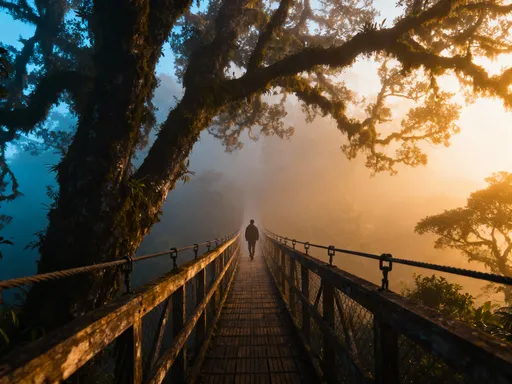
Nestled high in Costa Rica’s misty mountains, Monteverde isn’t just a reserve—it’s a living story. I remember stepping onto the hanging bridge, fog curling around ancient trees, hearing a guide whisper, “This forest breathes with us.” What makes this place sacred isn’t only its rare wildlife, but how deeply culture and conservation are woven together. This is more than eco-tourism—it’s a quiet revolution of respect, tradition, and shared responsibility. In a world where nature often retreats under human pressure, Monteverde stands as a testament to what happens when people choose to listen, to honor the land, and to live in harmony with the rhythms of the earth. Here, every trail, every cup of coffee, every local voice tells a story of balance—between past and future, between community and wilderness.
The Heart of Monteverde: More Than Just a Reserve
Spanning over 10,500 hectares in the Cordillera de Tilarán, the Monteverde Cloud Forest Reserve rises between 1,200 and 1,800 meters above sea level, where mist lingers like a permanent breath across the canopy. This unique elevation creates a delicate microclimate that supports one of the most biodiverse ecosystems on the planet. Scientists have documented more than 2,500 plant species here, including 420 types of orchids, as well as over 100 mammal species, 400 bird species, and thousands of insects and amphibians. Among its most elusive treasures is the resplendent quetzal, a bird of dazzling emerald plumage and cultural reverence, whose presence signals the health of the forest. The reserve is not a recent creation but the result of decades of intentional stewardship rooted in a remarkable human story.
The origins of Monteverde’s conservation legacy trace back to the 1950s, when a group of Quaker families from Alabama sought refuge in Costa Rica. Driven by pacifist beliefs and disillusioned by the military draft during the Korean War, they were drawn to Costa Rica’s decision to abolish its army in 1948. Settling in the highlands, these families established a dairy cooperative that emphasized sustainable land use, clean water protection, and community self-reliance. Their values—simplicity, nonviolence, and environmental care—became the foundation of a new way of living. Over time, as scientists recognized the ecological significance of the surrounding forests, the Quakers partnered with biologists and local Ticos to protect the land from deforestation and cattle expansion.
What began as a modest effort to preserve watersheds evolved into one of Latin America’s most respected conservation models. In 1972, the Tropical Science Center, supported by the Quaker community and international researchers, officially established the Monteverde Cloud Forest Reserve. The transition from dairy farming to forest protection was not abrupt but thoughtful, guided by long-term vision rather than short-term profit. This cultural commitment to sustainability—born from ethical conviction—set Monteverde apart. Today, the reserve stands not only as a sanctuary for biodiversity but as a symbol of how deeply held values can shape the fate of a landscape.
Culture as a Guardian: How Tradition Protects Nature
In Costa Rica, the phrase *pura vida* is more than a greeting—it is a philosophy of gratitude, simplicity, and balance with nature. In Monteverde, this mindset is lived daily, shaping everything from farming practices to tourism policies. The community’s deep respect for the natural world is not rooted in abstract environmentalism but in a tangible understanding that their well-being depends on healthy forests, clean rivers, and fertile soil. This cultural consciousness has become a powerful force for conservation, turning tradition into a living guardian of the cloud forest.
Local knowledge plays a crucial role in maintaining ecological balance. While the Quaker settlers brought scientific rigor and ethical farming, they also learned from the surrounding Tico and indigenous communities, who had long understood the rhythms of the land. Today, many conservation strategies integrate traditional practices, such as agroforestry, natural pest control, and seasonal planting cycles. These methods are not relics of the past but active components of a resilient agricultural system. Organic coffee farms, for example, grow beans under shade trees that provide habitat for birds and prevent soil erosion. These farms are often family-run, certified by international sustainability standards, and marketed as part of the region’s authentic identity.
Community-led initiatives further reinforce this culture of care. Cooperatives like the Monteverde Cheese Factory and the Local Women’s Artisan Group ensure that economic benefits stay within the region while promoting environmentally responsible production. Eco-friendly homestays, run by local families, offer visitors a chance to experience rural Costa Rican life while minimizing environmental impact. These efforts are not driven solely by tourism demand but by a collective desire to preserve both cultural heritage and natural resources. In Monteverde, conservation is not imposed from the outside; it grows naturally from the values of the people who call this misty highland home.
Walking the Bridges: A Visitor’s Role in Cultural Preservation
For travelers, entering the Monteverde Cloud Forest Reserve is an immersive journey through layers of life and legacy. The network of hanging bridges—some stretching over 150 meters above the forest floor—offers a rare perspective, allowing visitors to walk among the canopy where bromeliads cling to branches and howler monkeys move silently through the fog. But these trails are more than scenic pathways; they are corridors of storytelling. Local guides, many born and raised in the region, lead visitors with quiet reverence, pointing out the curled frond of a tree fern, the call of a three-wattled bellbird, or the intricate web of a golden orb spider.
These guides do not merely identify species—they share the cultural and ecological significance behind them. A simple walk becomes a lesson in interdependence: how the agouti disperses avocado seeds, how epiphytes capture moisture from the mist, and how the loss of one species can unravel the entire web. This interpretive approach transforms tourism from passive sightseeing into active learning. It also ensures that visitors leave not just with photographs, but with understanding. The revenue generated from guided tours directly supports the reserve’s maintenance, reforestation projects, and environmental education programs in local schools, creating a virtuous cycle where tourism fuels both conservation and community development.
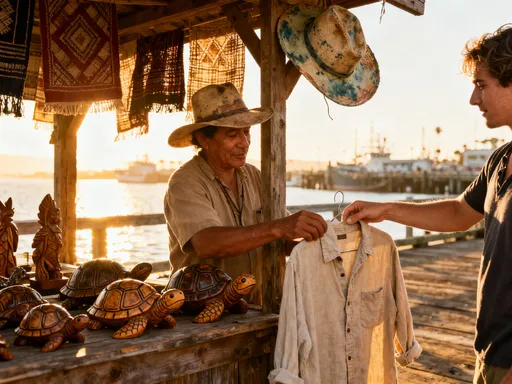
Yet, with great access comes great responsibility. To protect the forest’s delicate balance, strict ethical guidelines are in place. Visitors are asked to stay on marked trails to prevent soil compaction and root damage, to avoid loud noises in designated silence zones to minimize stress on wildlife, and to carry out all waste. Single-use plastics are discouraged, and many tour operators provide reusable water bottles and eco-friendly snacks. Supporting local vendors—whether buying handmade crafts, eating at family-run restaurants, or booking with community-based tour companies—ensures that tourism dollars benefit those who protect the land. In Monteverde, every choice a visitor makes becomes part of the broader story of stewardship.
Voices of the Forest: Meeting the People Behind the Protection
Behind the science and scenery are the people whose lives are intertwined with the forest. Take Señora Elena Morales, a park ranger for over twenty years, whose father once cleared land for pasture before the conservation movement took root. “I saw the change,” she says, “and I chose to protect what was left.” Her daily patrols include monitoring wildlife, reporting illegal activity, and educating visitors. Her uniform may be official, but her motivation is personal: “This forest is my family’s history. It’s where I played as a child. If I don’t protect it, who will?”
Then there is Dr. Luis Fernández, a Costa Rican biologist who returned from overseas research to lead reforestation efforts in degraded areas near the reserve. His team uses native seedlings grown in community nurseries, involving local youth in planting and monitoring. “We’re not just restoring trees,” he explains. “We’re restoring relationships—with the land, with each other.” His work is supported by grants, but also by volunteer programs that bring international students to learn and contribute. These collaborations emphasize knowledge exchange rather than extraction, ensuring that local leadership remains at the center of conservation.
Artisans like María González also play a quiet but vital role. Her handmade jewelry, crafted from sustainably harvested seeds and recycled materials, is sold at local markets and eco-stores. Each piece tells a story: a necklace made from tagua nut symbolizes resilience; earrings shaped like leaves honor the forest’s quiet beauty. Through her craft, she preserves cultural expression while supporting her family. Increasingly, young people are stepping into these roles, inspired by school programs that blend biology, ecology, and cultural studies. Environmental education is not an add-on but a core part of identity, ensuring that the next generation inherits not just a forest, but a commitment to protect it.
Beyond the Trees: Cultural Experiences That Deepen Understanding
To truly understand Monteverde, one must step beyond the trails and into the heart of community life. The Monteverde Institute, a nonprofit education center, offers workshops on sustainable agriculture, rainwater harvesting, and native plant restoration. Visitors can participate in hands-on activities, such as planting trees or building compost systems, gaining practical insight into daily conservation efforts. These experiences shift the traveler’s role from observer to participant, fostering a deeper emotional connection to the place.
Local farms open their gates to tourists for authentic farm-to-table experiences. At Finca Bellavista, a family-run organic farm, guests harvest vegetables, feed free-range chickens, and enjoy meals prepared with ingredients grown on-site. The food is simple but rich in flavor—black beans, plantains, fresh cheese, and coffee brewed from beans roasted that morning. These meals are more than sustenance; they are celebrations of local abundance and sustainable living. Birdwatching tours led by expert naturalists offer another layer of engagement. Armed with binoculars and field guides, visitors learn to identify species by sight and sound, gaining appreciation for the forest’s complexity.
Perhaps most transformative are reforestation volunteer days, where tourists work alongside locals to plant native trees in areas affected by past clearing. Digging holes, placing seedlings, and watering them under the misty sky creates a tangible sense of contribution. One visitor from Germany described the experience as “humbling”—not because of physical labor, but because it revealed how small actions, multiplied over time, can heal the land. These immersive experiences do more than educate; they build empathy, turning visitors into advocates who carry Monteverde’s story far beyond the mountains.
Challenges in Balance: Tourism, Growth, and Cultural Integrity
Monteverde’s success has brought both opportunity and challenge. Once a quiet highland settlement, it now welcomes over 70,000 visitors annually, drawn by its reputation as a model of sustainable tourism. While this influx supports the local economy, it also strains infrastructure, increases waste, and risks commodifying culture. The community faces a constant balancing act: how to welcome the world without losing its soul. Roads built for access can fragment wildlife corridors; new hotels may lack eco-certifications; souvenir shops risk replacing authentic crafts with mass-produced imports.
In response, Monteverde has implemented thoughtful regulations. Visitor numbers to the main reserve are capped, and advance reservations are required during peak seasons. Waste management systems prioritize recycling and composting, and many businesses participate in the Certification for Sustainable Tourism (CST), a national program that evaluates environmental, social, and cultural performance. Local leaders emphasize quality over quantity, favoring longer stays with deeper engagement rather than high-turnover tourism. Community meetings regularly discuss development plans, ensuring that decisions reflect collective values rather than outside interests.
The pressure to conform to global eco-tourism trends is real, but Monteverde resists superficial branding. Sustainability here is not a marketing slogan but a lived reality. When a proposed cable car project threatened to disrupt the canopy, residents organized town halls, consulted scientists, and ultimately rejected the plan. This democratic process—rooted in respect for nature and community voice—demonstrates that cultural integrity is non-negotiable. Growth is welcome, but only if it aligns with the principles that made Monteverde special in the first place.
A Model for the World: Why Monteverde Matters Beyond Costa Rica
The story of Monteverde transcends its mountain borders. In an era of climate crisis and biodiversity loss, it offers a powerful example of how culture and conservation can coexist—and even strengthen each other. Unlike top-down conservation models that exclude local populations, Monteverde shows that lasting protection emerges when people feel ownership, pride, and responsibility for their environment. This is not just about saving species; it is about preserving ways of life, values, and intergenerational wisdom.
Other regions facing environmental challenges can learn from Monteverde’s integration of ethics, education, and economics. Whether in the Andes, the Himalayas, or the Pacific Islands, communities can adopt similar principles—valuing local knowledge, supporting sustainable livelihoods, and involving youth in stewardship. The key lesson is that conservation cannot succeed in isolation; it must be woven into the cultural fabric. When people see nature as part of their identity, not a resource to exploit, protection becomes instinctive.
For travelers, Monteverde invites a shift in perspective. It challenges the notion that tourism is merely about escape or leisure. Instead, it offers a vision of travel as a reciprocal relationship—one where visitors give as much as they receive. By choosing destinations where culture and conservation walk hand in hand, tourists become part of a global movement toward respect and renewal. The whisper heard on the hanging bridge—that the forest breathes with us—is not poetry. It is a reminder of our shared breath, our shared home. And in that quiet truth lies hope for a more balanced world.