Beyond the Crowds: A Quiet Glimpse of the Great Barrier Reef’s Hidden Wonders
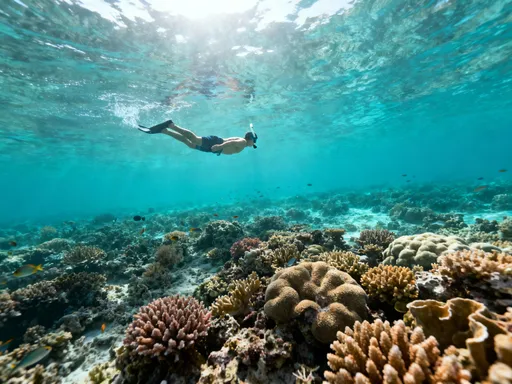
Have you ever floated above a world so vivid it feels unreal? The Great Barrier Reef is more than postcard views—it’s a living, breathing masterpiece. Most visitors stick to the famous spots, but I discovered quieter corners where the coral thrives and the silence underwater speaks volumes. This is not just sightseeing—it’s a deeper kind of seeing. Beneath the surface, far from the engine hum of crowded reef platforms, lies a realm of stillness and color that pulses with quiet life. Here, the water is clearer, the fish bolder, and the coral more vibrant. This journey into the reef’s hidden vistas is not only a gift to the soul but a responsibility to protect what remains.
The Myth of the Mainstream
The Great Barrier Reef stretches over 2,300 kilometers along Australia’s northeastern coast, a vast underwater tapestry of coral gardens, sandy cays, and marine highways. Each year, hundreds of thousands of visitors arrive in Cairns or Port Douglas, boarding large catamarans bound for well-known reef platforms like those on the outer Agincourt or Hastings Reefs. These sites offer reliable snorkeling and diving conditions, glass-bottom boat tours, and underwater observatories—perfect for first-time explorers. Yet, their popularity comes at a cost. High footfall, even with regulated access, contributes to physical coral damage, increased pollution from sunscreen and waste, and disruption to marine behavior.
While these mainstream experiences provide valuable introductions to reef life, they often shape a limited perception of what the reef truly is. Many tourists leave believing they’ve seen the Great Barrier Reef in full, unaware that the most biodiverse and pristine sections lie beyond the reach of mass tourism. The myth persists that the best experiences are the most accessible ones. In truth, the opposite is often the case. The very factors that make a site popular—easy access, infrastructure, marketing—also make it vulnerable to degradation. As coral bleaching events become more frequent due to climate change, protecting less-visited areas is not just desirable; it is essential.
Thankfully, a shift is underway. Travelers are increasingly seeking authenticity over convenience, depth over duration. They want to witness nature not as spectators behind glass, but as quiet observers immersed in its rhythm. This growing desire for low-impact, meaningful experiences is opening the door to a new kind of reef tourism—one that values preservation as much as exploration. The quiet reefs, once overlooked, are now being rediscovered not for their novelty, but for their integrity.
Why Seek the Unseen? The Value of Off-the-Beaten-Path Viewing
What transforms a simple snorkel into a profound experience? It is not the number of fish seen, nor the clarity of a photograph. It is the sense of connection—the moment when the boundary between observer and observed dissolves. In the quieter sections of the reef, this connection becomes possible. Solitude allows for presence. Without the chatter of groups or the thrum of boat engines, the underwater world reveals itself in subtle ways: the slow unfurling of a feather star, the watchful eye of a reef shark drifting past, the delicate flutter of a parrotfish nibbling at coral.
Scientific studies have shown that lesser-visited reef sites often exhibit higher coral cover and greater biodiversity. Reduced human contact means less physical damage and lower stress on marine organisms. In remote areas such as the ribbon reefs north of Cairns or the outer slopes near Lizard Island, researchers have documented healthier coral communities and more stable fish populations. These sites are not just refuges for marine life—they are living laboratories of resilience. For the traveler, they offer a rare opportunity to witness the reef as it once was: dynamic, balanced, and teeming with quiet energy.
Beyond ecological benefits, there are deep emotional and psychological rewards in undisturbed nature. The practice of mindful observation—focusing attention without expectation—has been linked to reduced stress, improved mood, and increased feelings of awe. Floating above a secluded coral garden, one begins to sense the reef not as a destination, but as a living system of which we are a part. This awareness fosters humility and care. It is one thing to admire the reef from a distance; it is another to feel its pulse and recognize our role in its survival.
Choosing the Right Spot: How to Find Hidden Reef Vistas
Not all sections of the Great Barrier Reef are equally accessible—or equally protected. The northern reaches, particularly those near Cooktown and the Bloomfield Coast, remain among the least visited. These areas are farther from major tourist hubs, which limits daily boat traffic and preserves water quality. The ribbon reefs, a series of narrow, north-south aligned coral formations stretching from Cairns to Lizard Island, are especially rich in marine life. Due to their distance from shore and the skill required to navigate them, they attract only small, specialized charters rather than mass tours.
Accessing these hidden vistas requires careful planning. Small-boat charters operated by eco-conscious companies are the best option. These operators typically limit groups to 10–12 guests, use low-emission engines, and follow strict environmental protocols. Many are certified by Ecotourism Australia or participate in the Green Travel Guide program, ensuring that their practices align with conservation goals. Unlike large platforms that anchor directly on reef flats, these vessels use mooring buoys or drift snorkeling techniques to minimize contact with the seabed.
Timing also plays a crucial role in finding solitude. The peak tourist season, from June to October, brings the clearest skies and calmest seas—but also the most visitors. For a quieter experience, consider traveling in the shoulder months of May or November. Water visibility remains high, weather is generally favorable, and reef sites are less crowded. Additionally, early morning departures increase the chances of encountering marine life at its most active while avoiding the midday influx of boats. By aligning travel plans with natural rhythms rather than tourist calendars, visitors can significantly enhance both the quality and impact of their experience.
What to Expect: A Sensory Guide to Quiet Reef Exploration
Stepping into the water at a secluded reef site is like entering a different world. The first thing many notice is the silence. Beneath the surface, sound travels differently—waves become muffled pulses, and human voices vanish. What remains is the soft crackle of snapping shrimp, the occasional grunt of a coral trout, and the rhythmic breath of your own snorkel. This auditory stillness sharpens other senses. Light filters down in shimmering columns, illuminating coral formations in hues of electric blue, sunflower yellow, and deep violet. The water feels cooler, cleaner, and more alive against the skin.
Marine life in these undisturbed zones behaves differently. Turtles glide with unhurried grace, often approaching curious swimmers with calm indifference. Reef sharks—typically blacktip or whitetip—patrol the drop-offs with quiet confidence, their presence a sign of a healthy ecosystem. Giant clams, some over a century old, rest in crevices with iridescent mantles open to the sunlight. Parrotfish, essential to reef health for their role in controlling algae, scrape at coral with beak-like mouths, leaving trails of fine sand in their wake. Even small creatures—the neon goby, the spotted hawkfish, the delicate nudibranch—reveal themselves more readily when undisturbed.
There is a fundamental difference between passive sightseeing and mindful observation. The former treats the reef as a display; the latter as a dialogue. When you slow down, breathe steadily, and resist the urge to touch or chase, the reef begins to share its secrets. A clownfish darts from its anemone. A school of sergeant majors parts around you like a living curtain. These moments are not staged or predictable—they arise from patience and respect. They remind us that true wonder cannot be rushed. It must be earned through stillness.
Planning Your Journey: Practical Steps for a Low-Impact Trip
Reaching the hidden reefs begins with choosing the right departure point. Cairns offers the most tour options, but also the highest concentration of large operators. Port Douglas, slightly farther north, serves as a gateway to the outer ribbon reefs and attracts a more discerning traveler. For the most remote access, Cooktown—accessible by light aircraft or a long drive—provides entry to the northernmost sections of the reef, where few commercial tours operate. Each location has its advantages, but the key is selecting a provider committed to sustainability.
Look for operators that emphasize small groups, environmental education, and direct conservation partnerships. Many offer guided snorkel tours led by marine biologists or naturalists who can interpret what you’re seeing and explain the reef’s ecological dynamics. These guides often carry underwater slates to point out species and answer questions without disturbing the silence. Some companies also participate in reef monitoring programs, allowing guests to contribute data on coral health or fish sightings—a powerful way to deepen engagement.
Preparation is equally important. High-quality, well-fitting snorkel gear enhances comfort and reduces the risk of accidental contact with coral. Rash guards or reef-safe wetsuits protect against sun and stings while minimizing the need for sunscreen. Speaking of sunscreen, only non-toxic, reef-safe formulas should be used—those labeled free of oxybenzone and octinoxate, chemicals known to harm coral larvae. Hydration, sun protection, and understanding basic snorkeling etiquette—such as maintaining neutral buoyancy and avoiding contact with marine life—are essential for a safe and respectful experience.
Preserving the View: How Observation Supports Conservation
Every time a traveler chooses a quiet reef over a crowded platform, they cast a vote for preservation. Low-impact tourism reduces physical stress on coral, lowers pollution levels, and helps maintain natural animal behaviors. But the benefits go beyond avoidance. Mindful observation can become an act of stewardship. Many eco-tours now incorporate citizen science elements, inviting guests to photograph coral bleaching signs, log fish species, or map reef zones using standardized protocols. These contributions, when aggregated, provide valuable data for researchers tracking the reef’s health.
The Great Barrier Reef Marine Park Authority supports several such initiatives, including the Eye on the Reef program, which enables tourists and operators to report observations via mobile apps. These real-time reports help authorities detect changes early—such as outbreaks of crown-of-thorns starfish or unusual water temperatures—and respond quickly. By participating, travelers move from passive visitors to active allies in conservation. They become part of a larger network dedicated to understanding and protecting this fragile ecosystem.
Respectful viewing is not passive. It is a form of environmental action. When we observe without disturbing, we allow the reef to thrive. When we share what we’ve seen—not just photos, but stories of connection—we inspire others to care. And when we choose operators and practices that prioritize sustainability, we support an economy that values preservation over profit. In this way, every quiet moment beneath the waves becomes a quiet act of hope.
The Bigger Picture: Rediscovering Wonder Through Stillness
The Great Barrier Reef is more than a natural wonder—it is a mirror. It reflects our relationship with the natural world: our capacity for awe, our history of neglect, and our potential for renewal. In the hushed depths of a remote reef, far from crowds and noise, one begins to understand that beauty is not just something to be captured, but something to be honored. The reef teaches patience. It shows us that balance is not static, but a constant negotiation between life and environment, growth and decay, resilience and vulnerability.
For the traveler, especially one accustomed to fast-paced itineraries and checklist tourism, this lesson is transformative. To sit still in the water, to watch a single coral head for five minutes, to notice how light shifts with the current—these are radical acts in a world that values speed and accumulation. Yet they are precisely what allow for true connection. They open space for wonder, and wonder is the foundation of care.
As climate change and ocean acidification threaten reefs worldwide, the need for this shift in perspective has never been greater. Protecting the Great Barrier Reef requires more than policy and science; it requires a change in how we see. We must move from seeing the reef as a resource or attraction to seeing it as a living community with which we share the planet. The quiet reefs offer a glimpse of what is possible—not just in terms of preservation, but in terms of relationship.
Every traveler who returns from a hidden reef carries a quiet truth: that the most profound experiences are often the least crowded. That clarity comes not from perfect visibility alone, but from presence. That to protect what we love, we must first learn to see it deeply. And in that seeing, we find not just beauty, but responsibility.
The Great Barrier Reef isn’t just a destination—it’s a conversation between human and nature. By stepping away from the crowds, we don’t just see more clearly. We begin to understand. And in that understanding lies the hope for its future.