You Won’t Believe These Hidden Art Spaces I Found Walking Kyoto
Walking through Kyoto is like stepping into a living museum—except the real magic isn’t always in the guidebooks. Last spring, I laced up my sneakers and wandered without a map, stumbling upon quiet alleys where traditional wooden machiya houses hide contemporary art gems. Far from crowds, these intimate spaces blend centuries-old architecture with bold modern creativity. If you’ve only seen Kyoto’s temples and tea houses, you’re missing half the story. Let me take you on a journey through the city’s quieter, artistic heartbeat—one step at a time.
Why Kyoto’s Art Scene Thrives Off the Beaten Path
Kyoto is often celebrated for its timeless temples, serene gardens, and centuries-old tea ceremonies. Yet beneath this well-preserved surface lies a quietly pulsing contemporary art scene, thriving in the shadows of tradition. Unlike cities that demolish the old for the new, Kyoto embraces continuity. Its identity is not frozen in time but layered—where ancient craftsmanship meets modern expression in unexpected harmony. This duality is what makes the city’s off-the-beaten-path art spaces so compelling. They are not rebellious disruptions but gentle evolutions, nurtured in the very structures that once housed silk weavers, sake brewers, and carpenters.
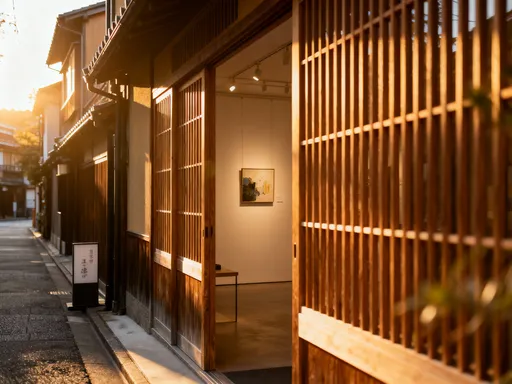
The secret to accessing this hidden world lies in Kyoto’s urban fabric: the machiya. These traditional wooden townhouses, with their narrow facades and deep interiors, were once the backbone of merchant life in the city. Today, many stand quietly repurposed—not into souvenir shops or cafes, but into intimate galleries, artist studios, and cultural salons. Their latticed windows, sunken hearths, and creaking floorboards lend an atmosphere of reverence, transforming each visit into a tactile experience. Because these spaces are often tucked into residential neighborhoods, they remain invisible to most tourists, accessible only to those who walk slowly and look closely.
Structured tours, while informative, often miss these subtle transitions. They follow predictable routes—Kinkaku-ji, Kiyomizu-dera, Fushimi Inari—each stop marked by crowds and ticket gates. But the soul of Kyoto’s art scene lives in the in-between: the alley where a paper artist hangs delicate washi sculptures in a former dye shop, or the quiet corner where a ceramicist displays hand-thrown bowls in a renovated storehouse. These places do not advertise. They do not need to. Their presence is felt, not announced. And their existence depends on a culture of quiet preservation, where property owners and artists alike value authenticity over spectacle.
The Art of Slow Travel: How Walking Transforms Your Experience
There is a rhythm to walking that no vehicle can replicate. In Kyoto, this rhythm becomes a form of meditation. The pace allows the senses to awaken—the scent of incense drifting from a half-open shrine gate, the sound of bamboo clappers in a hidden garden, the way sunlight filters through wooden lattices onto stone pathways. When you walk, you are not merely passing through a place; you are becoming part of its breath. This is especially true in Kyoto’s older districts, where narrow lanes twist like ribbons and every turn reveals a new texture, a different shade of moss, or a glimpse of a tiled roof against the sky.
Bus tours and taxi routes, by contrast, move too quickly to absorb these details. They deliver you to the main attractions, then whisk you away before the deeper layers can settle in. You see the Golden Pavilion, but you miss the small gallery two blocks behind it, where a Kyoto-born painter reimagines classical ukiyo-e with muted watercolors and poetic minimalism. You admire the torii gates of Fushimi Inari, but you don’t notice the backstreet studio where a textile artist hand-dyes silk using indigo vats that have been in her family for generations.
I learned this firsthand one April morning when I took a wrong turn near Nishijin. Intending to visit a famous weaving museum, I found myself in a quiet residential area, where the only sound was the distant chime of a temple bell. A wooden sign, barely visible beneath a camellia bush, read “Exhibition: Fragments of Light.” Curious, I stepped inside a low doorway and entered a converted machiya, its interior softened by paper lanterns and the quiet presence of abstract ink drawings on handmade paper. The artist, a woman in her sixties, sat in the corner, sipping tea. We exchanged a few words—she spoke little English, I spoke even less Japanese—but the exchange was warm, human. That moment, unplanned and unscripted, became one of the most meaningful of my trip. It reminded me that the best discoveries are not found on maps, but in the space between intention and accident.
Spotlight on Authentic Art Spaces Accessible by Foot
Kyoto is home to a growing number of small, authentic art spaces that welcome visitors without fanfare. These are not large institutions like the Kyoto National Museum or the Museum of Modern Art, though those have their place. Instead, they are intimate venues—some no larger than a living room—where art is displayed not for mass appeal but for dialogue, reflection, and connection. Many are located in neighborhoods that retain their historic character: Nishijin, known for its textile heritage; Gion’s quieter backstreets, away from the geisha parade routes; and the northern reaches of Higashiyama, where temple paths give way to residential lanes.
In Nishijin, for example, several former weaving workshops now function as artist-run galleries. These spaces often open during special events like the monthly “Third Saturday Gallery Walk,” when local studios invite the public to view works in progress, meet creators, and even try their hand at simple textile techniques. The art on display ranges from contemporary kimono designs to abstract fiber installations, all rooted in the area’s deep connection to thread and pattern. Because these are working studios, the atmosphere is informal and inviting. There are no velvet ropes, no audio guides—just the soft hum of a loom or the rustle of paper as an artist adjusts a hanging scroll.
In Gion’s backstreets, tucked between centuries-old teahouses and private residences, small exhibition rooms appear like hidden chapters in a book. Some are annexes to family homes, where descendants of artisans display modern interpretations of traditional crafts. Others are temporary pop-ups, organized by collectives of young Kyoto-based artists exploring themes of memory, impermanence, and seasonal change. These spaces often feature mixed media—ink painting paired with soundscapes, or ceramic sculptures arranged around a central ikebana arrangement. Because they are modest in scale, they encourage close looking, quiet contemplation, and personal connection.
Northern Higashiyama, less trafficked than its southern counterpart, offers another kind of artistic intimacy. Here, near the quieter temples like Honen-in and Nanzen-ji, small ceramic studios welcome visitors to view and purchase hand-thrown pieces. Some artists open their doors on weekends, offering tea and conversation alongside their work. The pottery itself often reflects the seasons—earthy brown glazes in autumn, soft celadon greens in spring—echoing the natural rhythms that shape life in Kyoto. These visits feel less like shopping and more like participation in a living tradition, where each bowl, cup, or vase carries the imprint of its maker’s hand and heart.
How to Discover Art Spaces Without a Tourist Map
Finding these hidden art spaces requires a shift in mindset—from seeking to noticing. There is no single guidebook that lists every small gallery or open studio in Kyoto, nor should there be. Part of their charm lies in their obscurity, their resistance to commercialization. But there are ways to increase your chances of discovery without relying on digital maps or tour brochures. The first is to learn the language of subtle cues. In Kyoto, art spaces often announce themselves quietly: a hand-painted sign in calligraphy, a single scroll hung in a window, or a door left slightly ajar on a pleasant afternoon.
One of the most reliable times to explore is during neighborhood-based art events, such as the monthly gallery walks that take place in districts like Kamigyo and Nakagyo. These are not large-scale festivals but modest, community-driven initiatives where local artists open their doors to the public. Flyers are often posted in nearby cafes or libraries, and social media pages—though usually in Japanese—may list participating venues. Even if you cannot read the details, showing up on the right day and walking the side streets can lead to rewarding encounters. The atmosphere is warm, unhurried, and deeply local.
Another strategy is to pay attention to the rhythm of the neighborhoods. Areas undergoing subtle revitalization, such as parts of Kamigyo, often see an influx of young creatives who rent vacant machiya at lower costs. These zones may not yet appear on tourist radars, but they hum with quiet energy—a new coffee shop with rotating art on the walls, a closed shop with a temporary exhibition in the front window, or a courtyard where a sculpture has been placed for a week-long display. The key is to move slowly, to pause, to look up and down alleyways that seem to lead nowhere.
When in doubt, asking a local can be effective—but with care. A simple, respectful inquiry at a neighborhood shop or tea house can yield surprising results. Phrases like “Art nearby?” or “Gallery open today?” accompanied by a friendly smile, often prompt a nod or a gesture toward a hidden lane. Some residents take quiet pride in these spaces and are happy to share them with curious visitors. The important thing is to approach with humility, not entitlement. These are not attractions; they are part of someone’s life and work.
Balancing Tradition and Modernity: What Makes Kyoto’s Art Unique
What sets Kyoto’s contemporary art apart is not just its setting, but its soul. In many cities, modern art exists in contrast to tradition—loud, disruptive, defiant. In Kyoto, the relationship is more nuanced. Artists do not reject the past; they reinterpret it. They work with materials that have been cherished for centuries—washi paper, natural indigo, handmade brushes, ceramic clays from nearby hills—but use them in ways that feel fresh, personal, and sometimes quietly radical. The result is art that does not shout, but whispers. It invites you in rather than demands your attention.
Take, for example, the use of washi paper. Traditionally used for shoji screens, calligraphy, and bookbinding, it now appears in delicate three-dimensional installations—sheets folded into organic shapes, suspended from ceilings, catching light like frozen breath. Or consider indigo dye, once reserved for farmers’ garments, now transformed into abstract textile art that explores depth, shadow, and time. These materials carry history in their fibers, and the artists who use them are not just creators but custodians, continuing lineages while adding their own voice.
This balance extends to form and philosophy. Many Kyoto-based artists embrace minimalism, not as a Western aesthetic trend, but as a natural extension of Zen principles—simplicity, impermanence, and mindfulness. A single brushstroke on paper may represent not just skill, but a moment of presence. A ceramic bowl, slightly asymmetrical, honors the Japanese concept of wabi-sabi—the beauty of imperfection and transience. In this context, art is not merely decorative; it is a practice, a way of being.
Because these works emerge from intimate spaces—often the artist’s home or studio—they avoid the commercial sheen of mass-produced souvenirs. There is no pressure to buy. No loud signage. No crowds. Instead, there is space to pause, to reflect, to feel the weight of a handmade cup in your hands. This intimacy is what makes Kyoto’s art scene so special. It is not curated for tourists. It exists because it must, as a quiet continuation of a city that honors both memory and innovation.
Best Times and Routes for a Self-Guided Art Walk
Timing is everything when planning a self-guided art walk in Kyoto. The city’s seasonal rhythms shape not only its scenery but also the availability and atmosphere of small art spaces. Spring, particularly in late April after the cherry blossom crowds have thinned, offers mild temperatures and soft light—ideal for photographing delicate paper artworks or viewing gardens that often accompany gallery spaces. Autumn, with its crisp air and golden foliage, is equally rewarding. The cooler weather makes long walks comfortable, and the changing leaves add a natural backdrop to artistic exploration.
One recommended route begins at the northern end of the Philosopher’s Path, near Nanzen-ji Temple. From there, instead of following the main tourist flow south, turn east into the side streets leading toward Honen-in. This area, quieter than the bustling southern section, is dotted with small temples, private residences, and the occasional open studio. Walk slowly, allowing time to notice details—a lantern in a garden, a sign in calligraphy, a door slightly open. Around mid-morning or early afternoon, many artists are present, and the chance of conversation increases.
From Honen-in, continue toward the Ginkaku-ji area, but again, avoid the main path. Explore the lanes to the north and east, where machiya houses line narrow streets. This part of Higashiyama is less commercialized and more residential, making it a likely spot for artist-run spaces. Look for small cafes with art on the walls or community bulletin boards advertising local events. A short break at a quiet tea house can also provide an opportunity to ask staff about nearby exhibitions.
Another rewarding route begins in Nishijin, ideally on a third Saturday of the month when the gallery walk takes place. Start at the Nishijin Textile Center, then wander west and north into the quieter blocks. Here, the legacy of weaving meets contemporary art in surprising ways. Some galleries are located in former dye houses, their interiors still marked by vats and wooden beams. The walk can last two to three hours, with natural breaks at neighborhood tea shops or small restaurants serving Kyoto-style obanzai (home-style cooking). Because these areas are not designed for mass tourism, rest spots are modest but authentic—places where locals gather, not just serve.
Regardless of the route, wear comfortable shoes and carry a small notebook. Not to map every turn, but to record impressions—a color, a texture, a phrase overheard. These details become part of your own artistic memory, as valuable as any photograph. And remember: the goal is not to visit ten galleries in a day, but to experience one deeply. In Kyoto, less is often more.
Respecting the Space: Etiquette for Visiting Small Art Venues
Entering a small art space in Kyoto is not like walking into a museum. There are no ticket booths, no security guards, no loudspeakers. Often, there is not even a formal entrance. You step quietly, sometimes removing your shoes, into a space that may be someone’s home, studio, or family building. This intimacy demands a certain mindfulness. The unspoken rule is simple: move gently, speak softly, and observe with care.
Photography policies vary, and when in doubt, it is best to ask. Some artists welcome photos without flash, especially if they see genuine interest. Others prefer no photography at all, wanting the experience to remain personal and unmediated by screens. A polite nod or a quiet “May I take a photo?” goes a long way. If the answer is no, accept it with grace. The memory of the piece—the way the light caught a paper sculpture, the texture of a ceramic glaze—will stay with you just the same.
Interaction with artists, when they are present, should be respectful and unhurried. A simple greeting in Japanese—“Konnichiwa”—can open a warm exchange, even if conversation is limited by language. Many artists appreciate genuine curiosity more than fluent speech. If you wish to purchase something, do so quietly, understanding that even a small print or postcard supports their work. These are not mass-market souvenirs but meaningful tokens of connection.
Finally, remember that these spaces thrive on quiet appreciation, not performance. There is no need to post every moment on social media or collect receipts like trophies. The value lies in the experience itself—the act of discovery, the moment of stillness, the recognition that art can be both ancient and new, fragile and enduring. By honoring these spaces with presence rather than possession, you become part of Kyoto’s living artistic tradition.
Kyoto’s soul isn’t just in its past—it’s being quietly reimagined, one brushstroke at a time. Walking its lanes with curiosity opens doors to art spaces that aren’t advertised but deeply felt. This is travel at its most rewarding: slow, personal, and full of surprise. Next time you visit, leave room in your day—and your heart—for the unexpected gallery around the corner.